Est. 1828
The Story of Columbus
From a planned trading town on the fall line of the Chattahoochee River to Georgia's third-largest city, Columbus has nearly two centuries of history shaped by water, industry, war, and reinvention.
The Founding
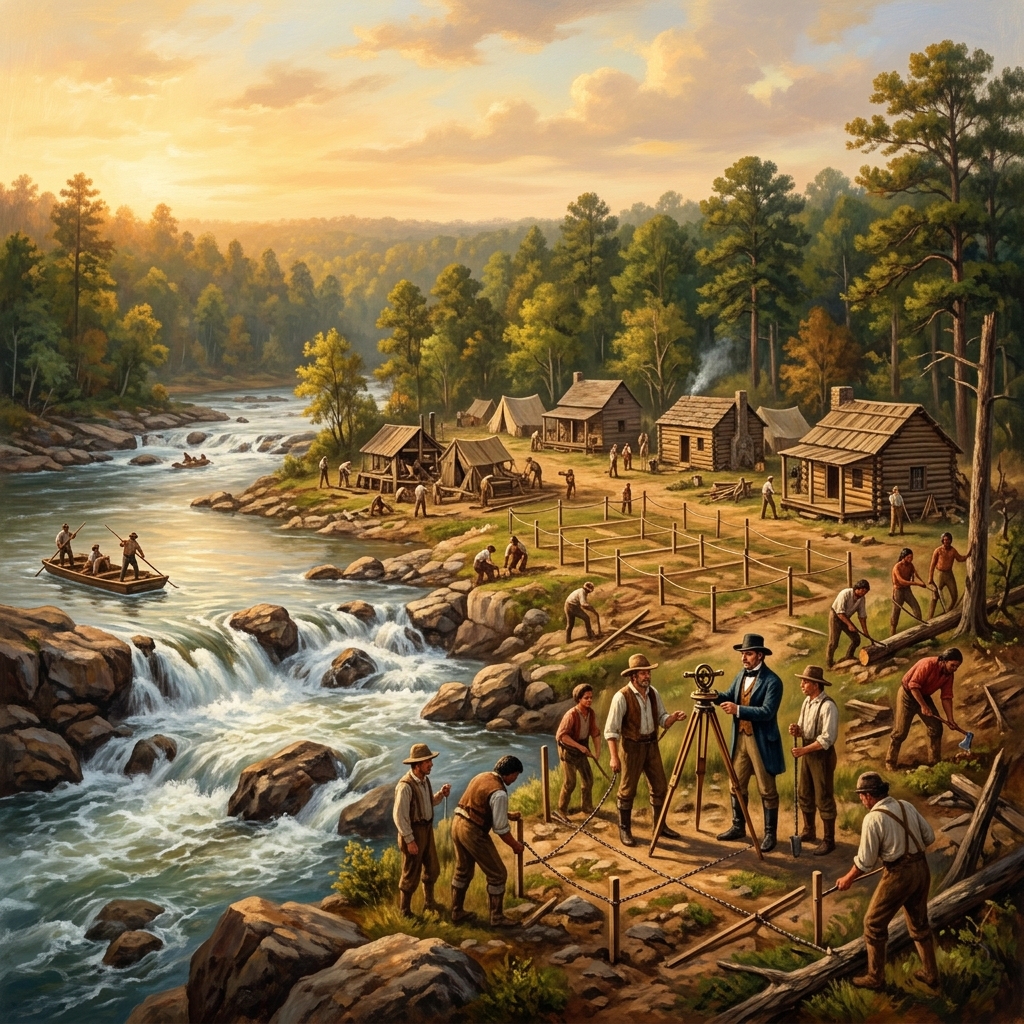
Columbus was established in 1828 as a planned trading town at the fall line of the Chattahoochee River — the last navigable point before the river tumbled over ancient rock ledges on its way south toward the Gulf of Mexico. The Georgia General Assembly chose this location deliberately: it would strengthen the state's western border with Alabama while harnessing the river's considerable hydropower potential for industry.
The city was laid out in a formal grid pattern, with broad avenues and public squares reflecting the confidence of its founders. Lots were sold at auction, and settlers arrived quickly, drawn by the promise of commerce and river trade. Steamboats could travel upriver from the port of Apalachicola, Florida, making Columbus a critical inland shipping hub.
But the land on which Columbus was built was not empty. It was the ancestral homeland of the Muscogee (Creek) people, who had lived along the Chattahoochee for centuries. The Creek Nation had already been forced to cede much of their territory through a series of coerced treaties. By 1836, the remaining Creek communities east of the Mississippi were forcibly removed during the Trail of Tears — a chapter of American history that is inseparable from the founding of Columbus itself.
The Lowell of the South
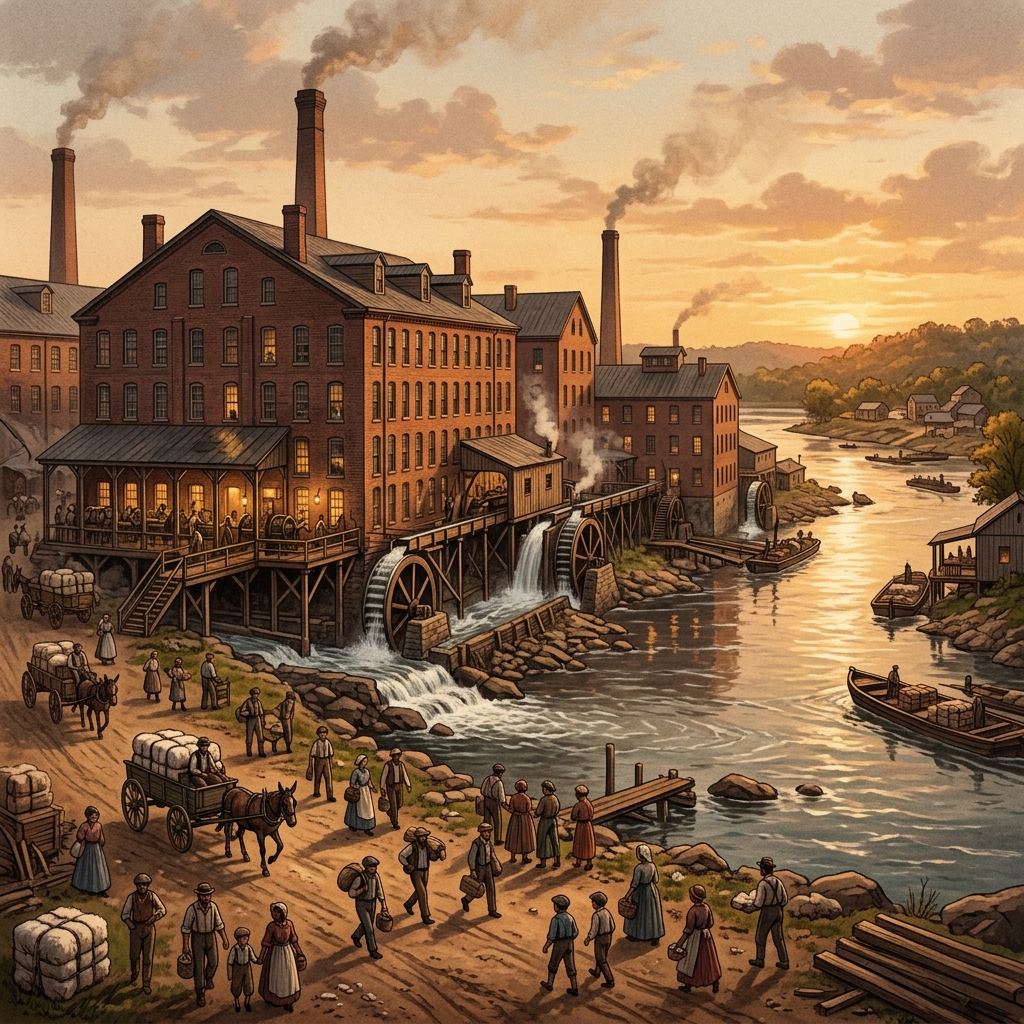
The Chattahoochee's fall line wasn't just a geographic curiosity — it was an engine. The river dropped more than 100 feet over a relatively short distance, creating enormous potential for water-powered industry. By the 1840s, entrepreneurs had begun building textile mills along the riverbank, channeling the current through millraces to drive looms and spinning frames.
The Eagle Manufacturing Company, founded in 1851, became one of the most prominent. Other mills followed: the Howard Factory, the Clapp Factory, and several smaller operations that together transformed Columbus from a trading outpost into a genuine manufacturing center. By the eve of the Civil War, the city's textile output rivaled that of many Northern mill towns.
Columbus earned the nickname "The Lowell of the South," a reference to the famous textile city in Massachusetts. The comparison was apt — both cities were defined by their relationship to falling water and the industrial revolution it powered. Cotton grown across the Deep South was shipped to Columbus, spun into thread, woven into cloth, and sent back out along the river.
The mills employed hundreds of workers, many of them women and children, in conditions that mirrored the difficult realities of early industrial labor everywhere. The wealth generated by the mills, however, funded the construction of grand homes, churches, and civic buildings that still stand in Columbus's historic districts today.
The Civil War
When the Civil War began, Columbus's industrial infrastructure made it one of the most strategically important cities in the Confederacy. The mills pivoted from commercial textiles to military production, turning out uniforms, tents, blankets, and other supplies for Confederate soldiers. The Confederate Naval Iron Works, established on the riverbank, built ironclad warships including the CSS Muscogee (later renamed the CSS Jackson).
The city also housed a sword factory, a firearms manufacturer, and numerous smaller workshops producing everything from buttons to cartridge boxes. Columbus was, in many ways, the industrial heartbeat of the Confederate war effort in the Deep South.
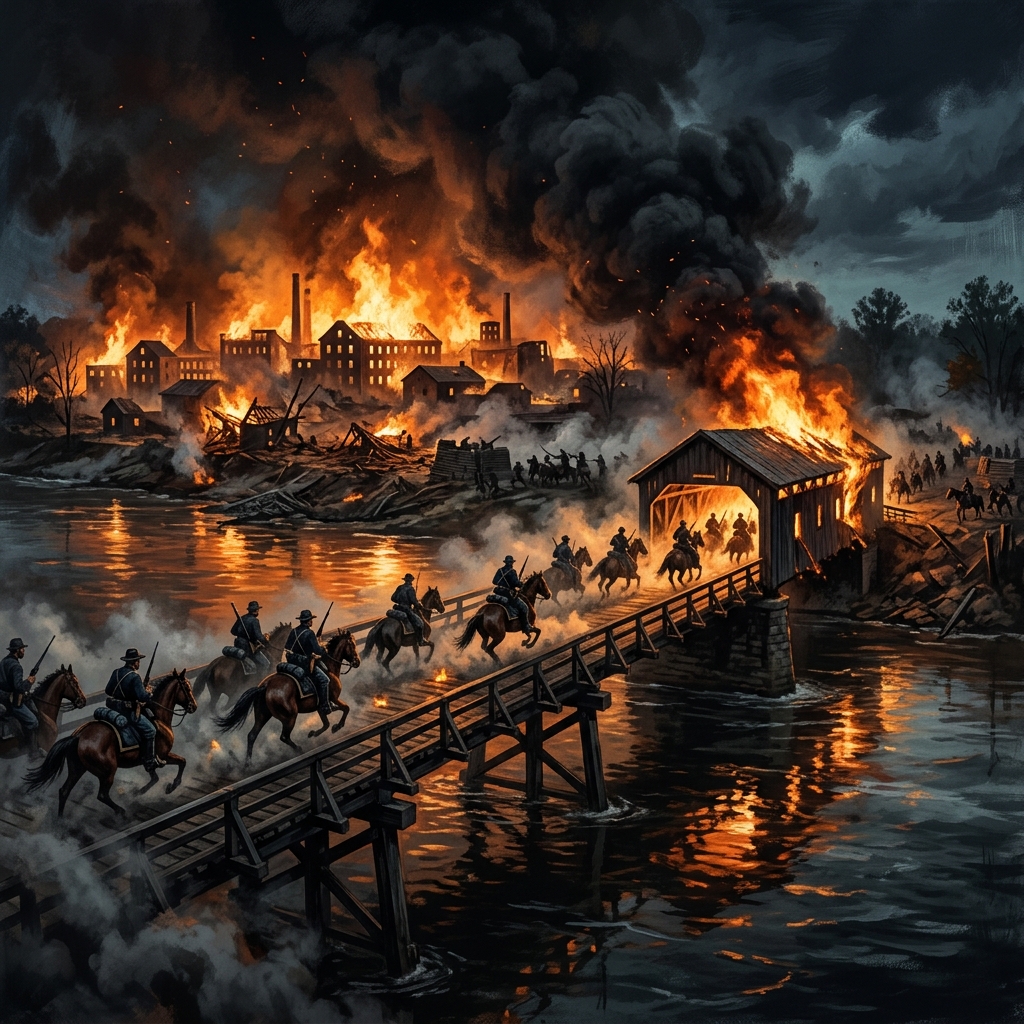
This made it a prime target. On April 16, 1865 — a full week after General Robert E. Lee had surrendered to Ulysses S. Grant at Appomattox Court House in Virginia — Union cavalry under General James H. Wilson attacked Columbus in what is often cited as the last major land battle of the Civil War. Wilson's forces, numbering some 13,000 troops, overwhelmed the city's defenders in a fierce nighttime assault.
The Battle of Columbus was devastating. Union troops burned the naval works, the cotton warehouses, and much of the industrial district. The CSS Jackson, still under construction, was set ablaze at its moorage. The destruction marked the definitive end of Columbus's role as a Confederate manufacturing center — and, symbolically, one of the final acts of the war itself.
Reconstruction & Industrial Rebirth
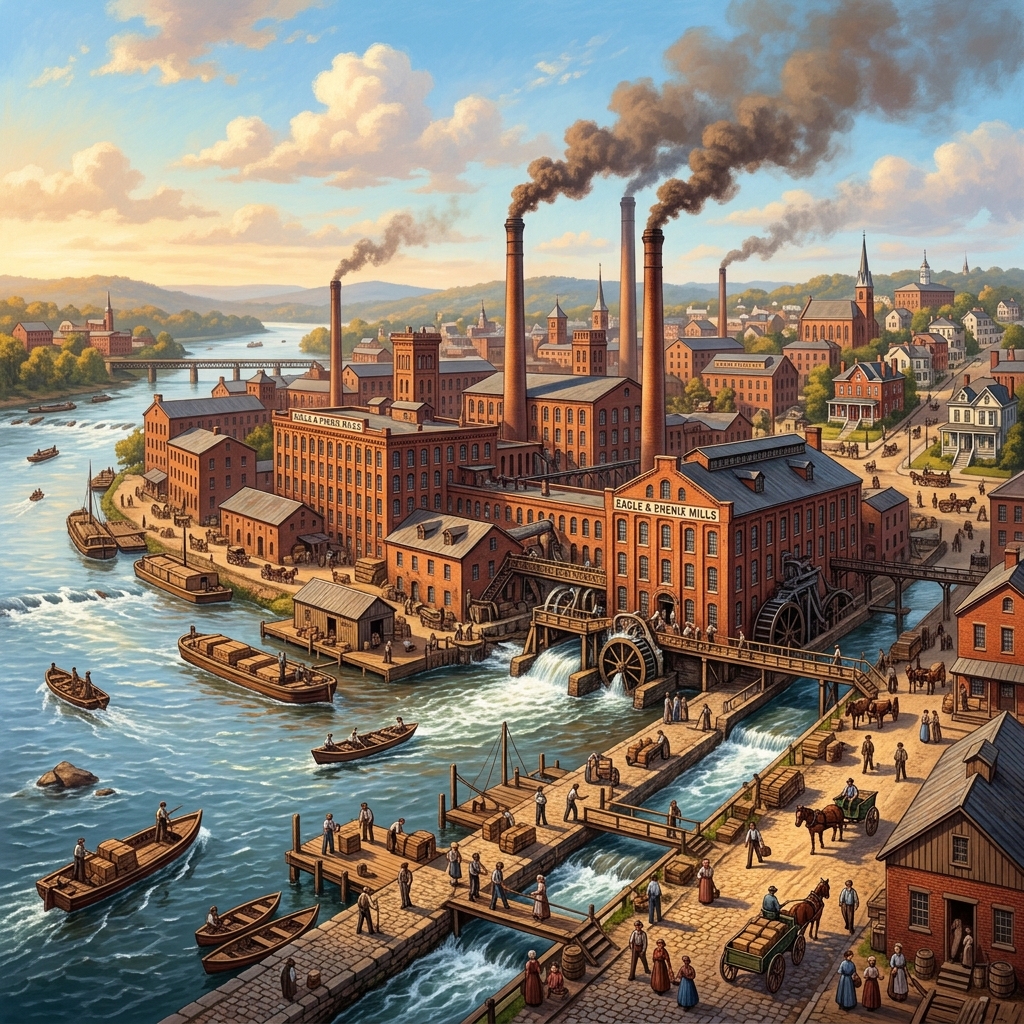
The ruins left by Wilson's Raid didn't stay ruins for long. In one of the more remarkable episodes of Southern industrial recovery, the Eagle Manufacturing Company merged with the nearby Phenix Factory to form the Eagle and Phenix Manufacturing Company. Rising quite literally from the ashes — the "Phenix" spelling was intentional — the combined operation grew to become the largest textile mill in the entire South.
By the 1880s, the Eagle and Phenix Mills complex stretched along the riverbank in a vast collection of brick buildings, employing over 1,500 workers and producing millions of yards of fabric annually. The mill village that grew up around it became a community unto itself, with company-owned housing, stores, and churches.
Other industries followed the mills' lead. Columbus became a center for iron foundries, lumber processing, and cottonseed oil production. The city's population grew steadily, and its business leaders invested in railroads, banks, and public infrastructure.
The Columbus Historic Riverfront Industrial District — encompassing the surviving mill buildings, raceways, and associated structures — is now a National Historic Landmark, recognized as one of the most significant collections of 19th-century industrial architecture in the American South. Many of these buildings have been adapted into lofts, restaurants, and cultural venues as part of the city's ongoing revitalization.
Military Heritage
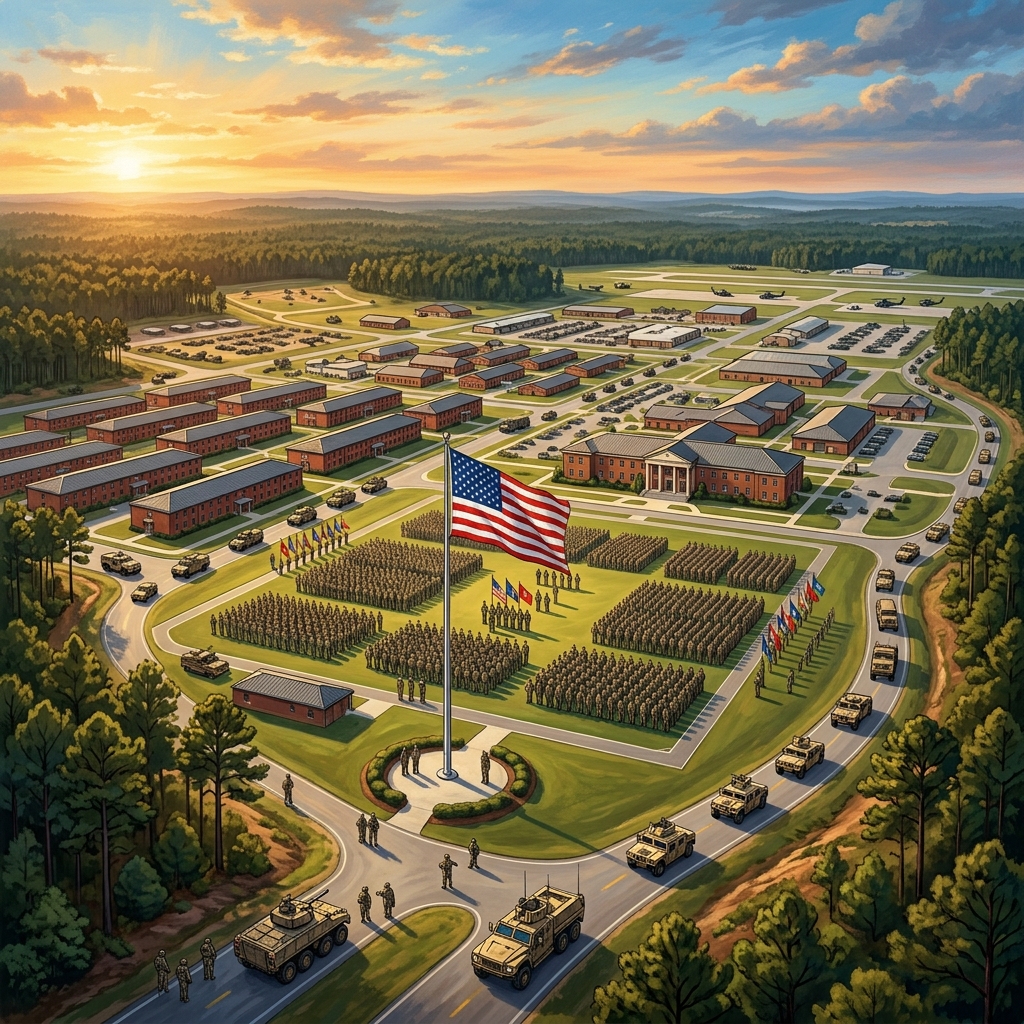
In 1918, the U.S. Army established a military installation on the rolling terrain south of Columbus. The post grew rapidly during both World Wars, becoming one of the largest military installations in the world. For decades, it served as the home of the U.S. Army Infantry School and, later, the Maneuver Center of Excellence — the primary training ground for infantry, armor, and cavalry soldiers.
The installation's relationship with Columbus has been symbiotic. Tens of thousands of soldiers and their families have called the region home, and the military's economic impact on the city has been immeasurable. Restaurants, shops, schools, and entire neighborhoods grew up to serve the military community.
The post's name has its own complex history. Originally named after a Confederate general, it was renamed Fort Moore in 2023 as part of a congressionally mandated renaming commission, honoring Lieutenant General Hal Moore and his wife Julia — celebrated figures in the history of American military service. Then, in 2025, the name reverted to Fort Benning under new legislation, this time honoring Corporal Fred G. Benning, a World War I soldier from Georgia who received the Distinguished Service Cross for extraordinary heroism in combat.
The National Infantry Museum, located just outside the installation's gates, is one of the finest military museums in the country. Its collection spans the entire history of the American infantryman, from the Revolutionary War to the present day, and draws visitors from across the nation. The museum is a must-visit for anyone interested in things to do in Columbus.
Consolidated Government
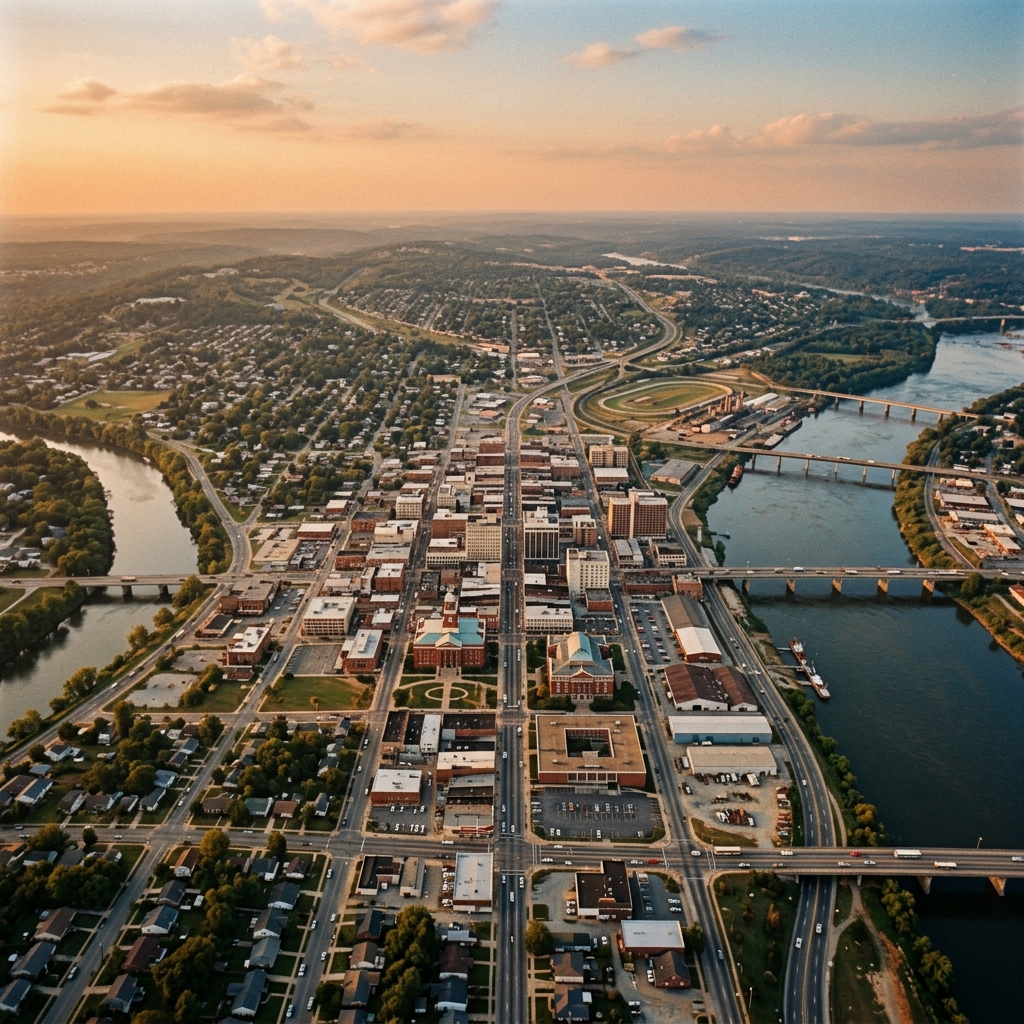
In 1971, Columbus made history in Georgia by becoming the first city in the state to merge its municipal government with its surrounding county. The Columbus-Muscogee County consolidation created a unified government structure that eliminated the duplication and inefficiency of maintaining separate city and county administrations.
The consolidated government model gave Columbus a larger tax base, streamlined public services, and a unified approach to planning and development. It also expanded the city's official boundaries to encompass the entire county — an area of approximately 221 square miles.
The consolidation was approved by voters in a 1970 referendum and took effect on January 1, 1971. It served as a model for subsequent city-county mergers across Georgia and the broader South, including the later consolidation of Athens-Clarke County in 1991. The unified government structure has given Columbus a distinct administrative advantage in economic development and regional planning.
Modern Columbus
Today, Columbus is the third-largest city in Georgia, with a population of approximately 206,922 residents. The city has evolved far beyond its roots as a mill town and military post, though both of those legacies remain woven into its identity.
Columbus is the birthplace and headquarters of Aflac (American Family Life Assurance Company), the Fortune 500 supplemental insurance giant that was founded here in 1955 by the Amos brothers. The company remains one of the city's largest employers and a defining presence in its skyline.
The financial technology sector has also become a major economic driver. TSYS (Total System Services), now part of Global Payments, grew from a small Columbus-based credit card processing operation into one of the world's largest payment technology companies. The fintech ecosystem that developed around TSYS continues to attract talent and investment to the region.
The Uptown Columbus district — the historic core along Broadway — has undergone a significant revitalization in recent years, with new restaurants, apartments, and cultural venues breathing life into buildings that had sat vacant for decades.
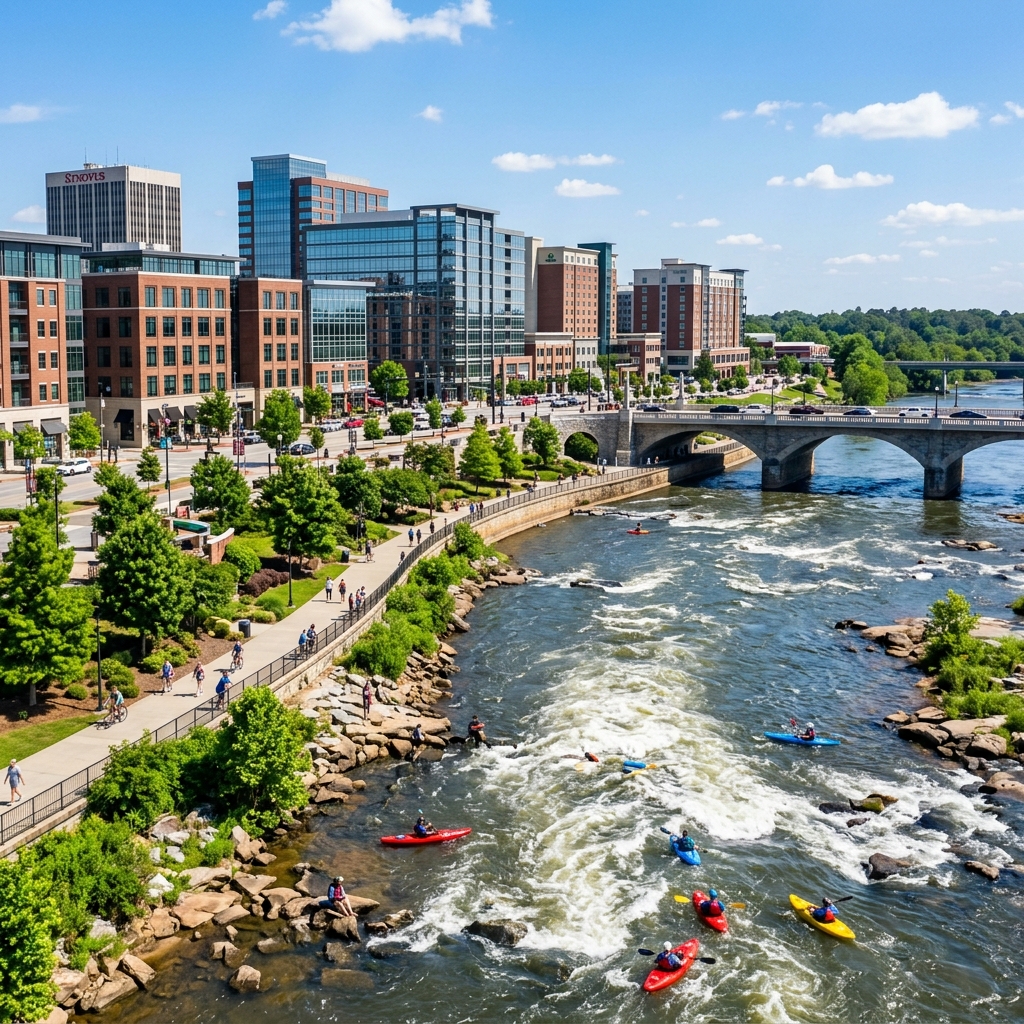
Perhaps the most dramatic symbol of Columbus's modern reinvention is the Chattahoochee whitewater course. Opened in 2013, the 2.5-mile course is the world's longest urban whitewater venue, created by removing obsolete dams and restoring the river's natural rapids through the heart of downtown. Kayakers, rafters, and stand-up paddleboarders now navigate Class II–IV rapids just steps from the RiverWalk — a transformation that would have astonished the mill workers who once harnessed that same current to power their looms.
The outdoor recreation opportunities extend well beyond the whitewater course. The Chattahoochee RiverWalk, the Fall Line Trace, and the surrounding network of trails make Columbus one of the most active cities in the Southeast. And the diverse neighborhoods that make up the consolidated city each tell their own chapter of the Columbus story.
Explore Columbus Today
Columbus's history isn't just in books and museums — it's in the streets, the river, and the neighborhoods that make up this city. See what's here now.